June 29, 2026
Corridor Champions: Mary Considine and Ian Campbell – Securing the Future of Cross-Border Connectivity
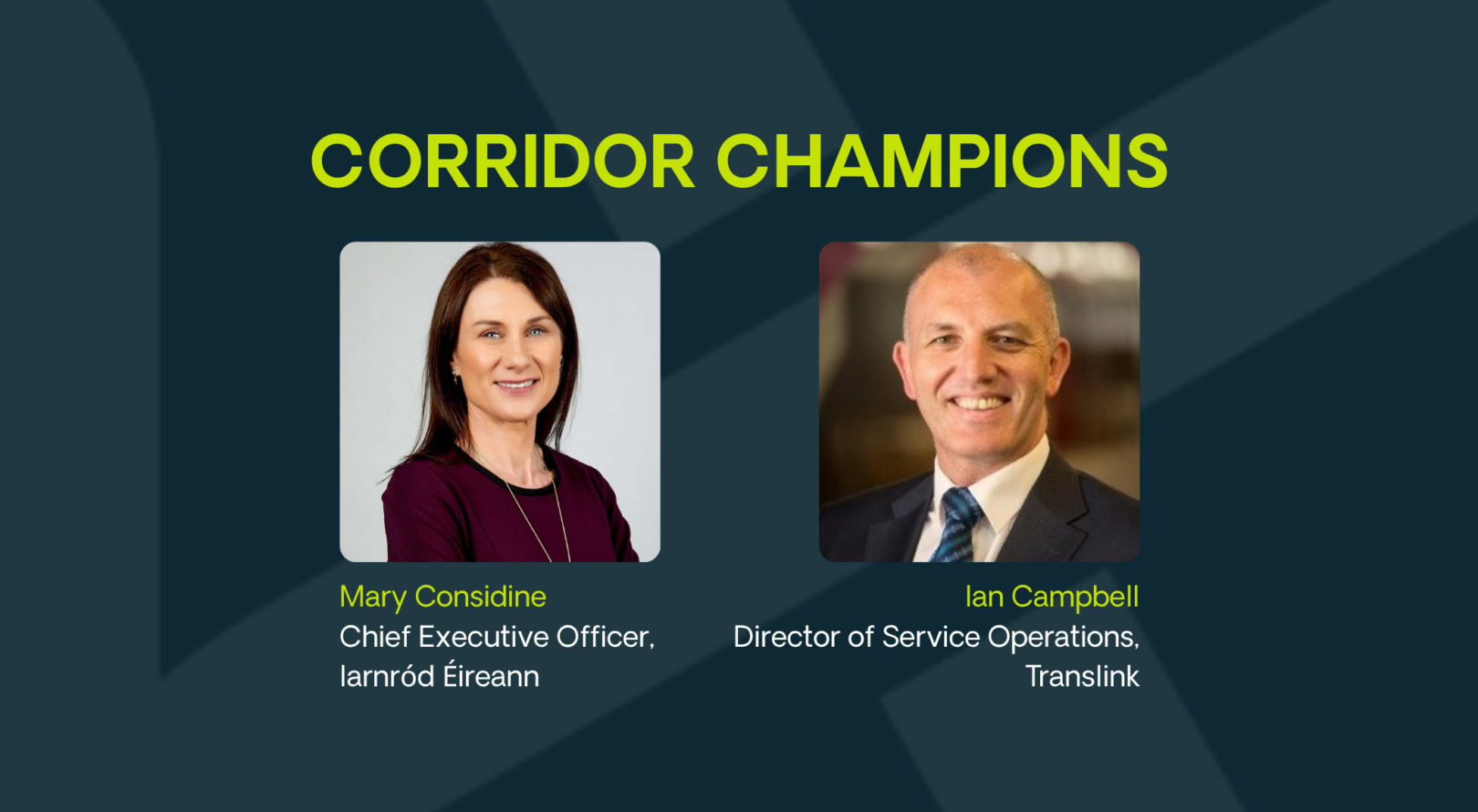
Each quarter, the ‘Corridor Champion’ series highlights standout leaders whose work is shaping and being shaped by the DBEC region. In this edition, the spotlight turns to Mary Considine, CEO of Iarnród Éireann, and Ian Campbell, Director of Service Operations for Translink, who spoke to us about their roles in overseeing a transformative era for the Dublin–Belfast rail link.
As leaders of the island’s national rail providers, both Considine and Campbell view the Dublin Belfast Economic Corridor (DBEC) as a key driver of future prosperity. With one-third of the island’s population living and working along the route, Considine is clear that,
“strong public transport is essential for the economic, social, and environmental needs of all who call the area home”.
Campbell reinforces this strategic importance.
“Rail connectivity creates, maintains and grows close communications, peace and prosperity between people, communities and businesses. This has never been more pertinent than in a post-Brexit world.”
Both leaders serve on the DBEC Industry Advisory Panel, ensuring that transport remains a key driver in enhancing regional competitiveness and resilience.
Hourly Services
The transition to an hourly service in 2024 has been hugely successful. Considine reports that cross-border journeys have surged by over 40%, signalling a major shift in market share toward rail. This momentum is echoed by Campbell, who highlights that in the 2025/26 period, over 1.6 million passengers travelled cross-border, contributing to a total of 3 million users when combined with local commuter traffic. This growth has seen regional hubs like Dundalk and Drogheda become busier than ever, proving the demand for high-capacity, frequent connectivity.
Innovation and Investment
A landmark €700 million investment in a new flagship fleet represents what Considine calls a “statement of confidence in the Dublin Belfast Economic Corridor”. This funding will introduce eight modern Stadler trains capable of 110mph, reducing journey times to under two hours. Beyond speed, the focus is on accessibility and sustainability. Campbell highlights that the trains will meet latest safety & emissions standards, future-proofed to support migration to net-zero carbon emissions by 2040. “The new trains will be designed to evolve with both companies as they travel towards a fully electrified cross-border rail corridor.”
Driving Regional Competitiveness
Campbell observes that while the corridor represents a small fraction of the island’s land, it is projected to host 35% of its jobs by 2040. Considine views rail as a “key enabler” for housing and commercial development, essential for attracting both domestic and foreign direct investment.
By operating as a combined economic force, both leaders believe the DBEC will enhance regional resilience and ensure the island remains a competitive place to invest, work, and do business.