September 29, 2026
Economic Evidence and Growth Opportunities in Focus at Dublin Belfast Economic Corridor Meeting
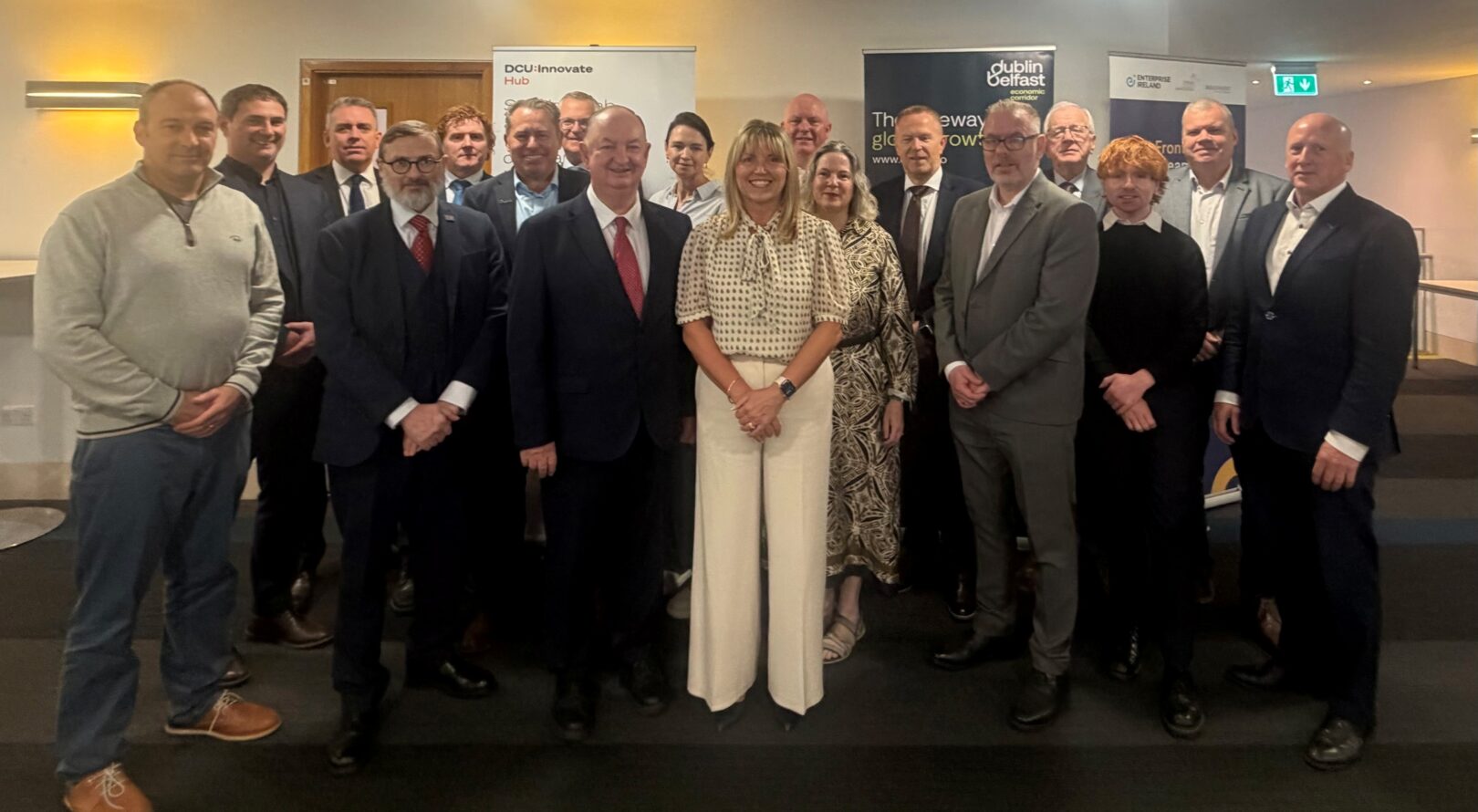
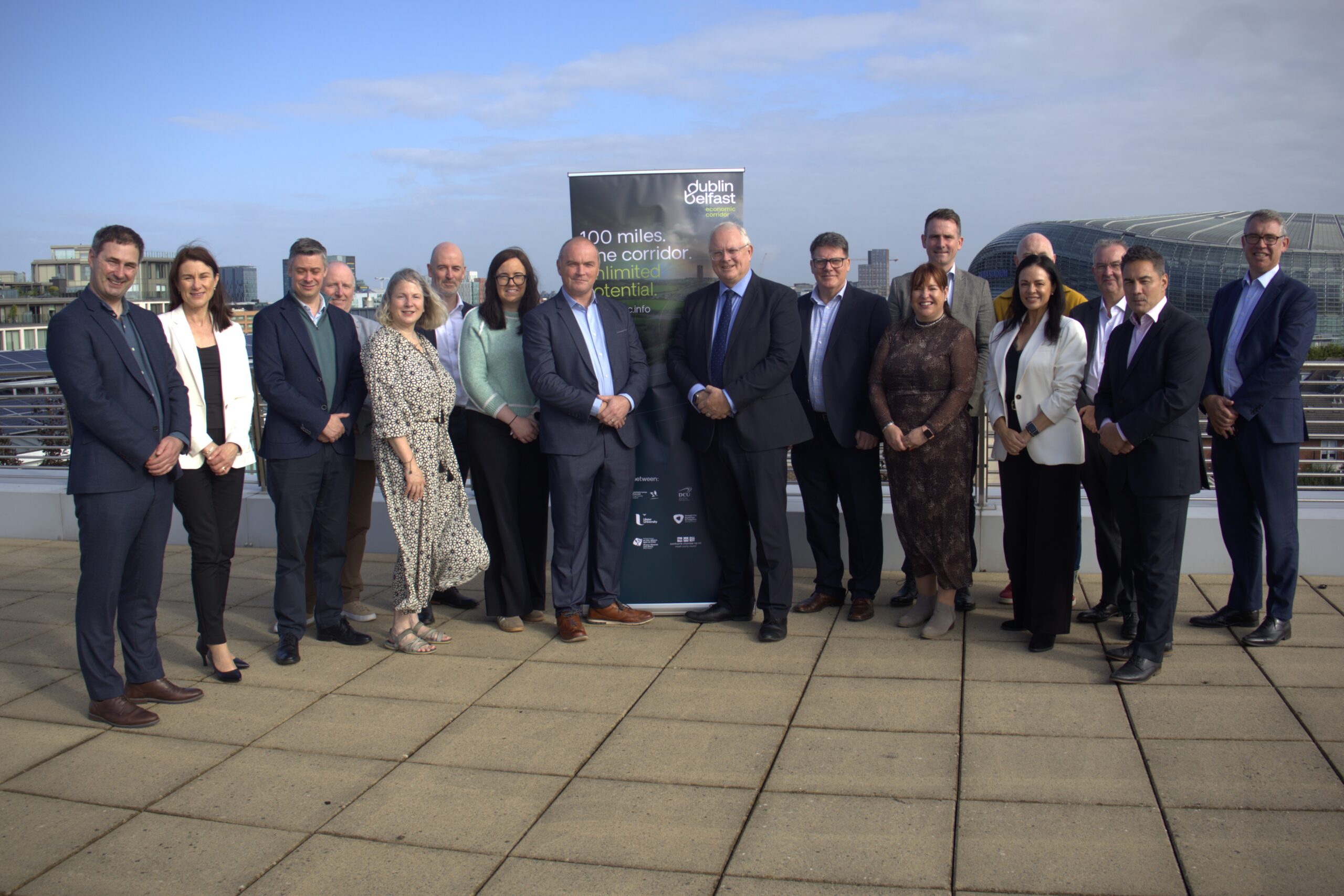
24 September 2026: Political representatives from across the Dublin Belfast Economic Corridor (DBEC) met recently at DCU:Innovate, Dublin City University, for the third quarterly meeting of the Political Advisory Group (PAG), where discussions focused on new economic evidence, regional competitiveness and opportunities to strengthen cross-border growth.
Chaired by Cllr Sharon Tolan, Co-Chair of the DBEC Political Advisory Group, the meeting brought together elected members from DBEC partner local authorities, alongside representatives from Ulster University, one of DBEC’s strategic university partners.
A key item on the agenda was a presentation from the Central Statistics Office (CSO) on its recent publication, Ireland and Northern Ireland: A Regional Economic Comparison 2023-2024, which includes a dedicated chapter examining economic and demographic trends across the Dublin Belfast Economic Corridor. The report provides a comprehensive assessment of economic conditions across Ireland and Northern Ireland, helping to better understand the Corridor as a connected economic geography.
The CSO analysis confirms the Dublin Belfast Economic Corridor’s growing importance as a connected economic region. Home to more than two million people, the Corridor benefits from rising disposable incomes, strong employment performance and significant concentrations of high-value economic activity. The research found that disposable household income increased across all regions between 2011 and 2023, while housing affordability varied significantly across the Corridor, with median house prices in Dublin standing at almost 10 times annual earnings compared with around five times in Belfast.
These findings highlight both the opportunities and challenges facing the Corridor as partners work to support sustainable economic growth and competitiveness.
The findings reinforce three key strategic opportunities for the Dublin Belfast Economic Corridor:
- Scale: A connected economic region of more than two million people.
- Balance: Different economic characteristics across the Corridor create opportunities for complementary growth rather than competition.
- Opportunity: A diverse economic base provides strong foundations for innovation, investment and talent development.
Speaking at the meeting, Brian King, Head of National Accounts Analysis and Globalisation at the CSO, said:
“The Dublin Belfast Economic Corridor is a unique economic geography that demonstrates both the opportunities and challenges of regional growth across the island. By providing evidence at a local and regional level, this research helps support informed decision-making and future investment across the Corridor.”
The meeting was hosted at DCU:Innovate, Dublin City University’s innovation ecosystem, which brings together researchers, entrepreneurs, businesses and investors to support innovation, commercialisation and business growth.
Welcoming members to DCU:Innovate, Ronan Furlong, Executive Director of DCU:Innovate Hub, said:
“The Corridor connects many of the island’s key economic assets and creates opportunities for businesses to access new markets, skills, research expertise and partnerships. Strengthening those connections will be critical to driving growth, attracting investment and supporting sustainable economic development across the region.”
The Political Advisory Group also received updates on the work of the DBEC Industry Advisory Panel, project development activity, funding opportunities, strategic engagement programmes and delivery of the partnership’s communications and marketing strategy.
The meeting highlighted the importance of continued collaboration across local government, industry and academia to maximise the economic potential of the Dublin Belfast Economic Corridor.
The insights from the CSO research will help inform future priorities as partners work together to strengthen competitiveness, attract investment and support sustainable growth across the region.