April 24, 2026
Louth Hosts First 2026 Meeting of Dublin Belfast Economic Corridor Political Advisory Group
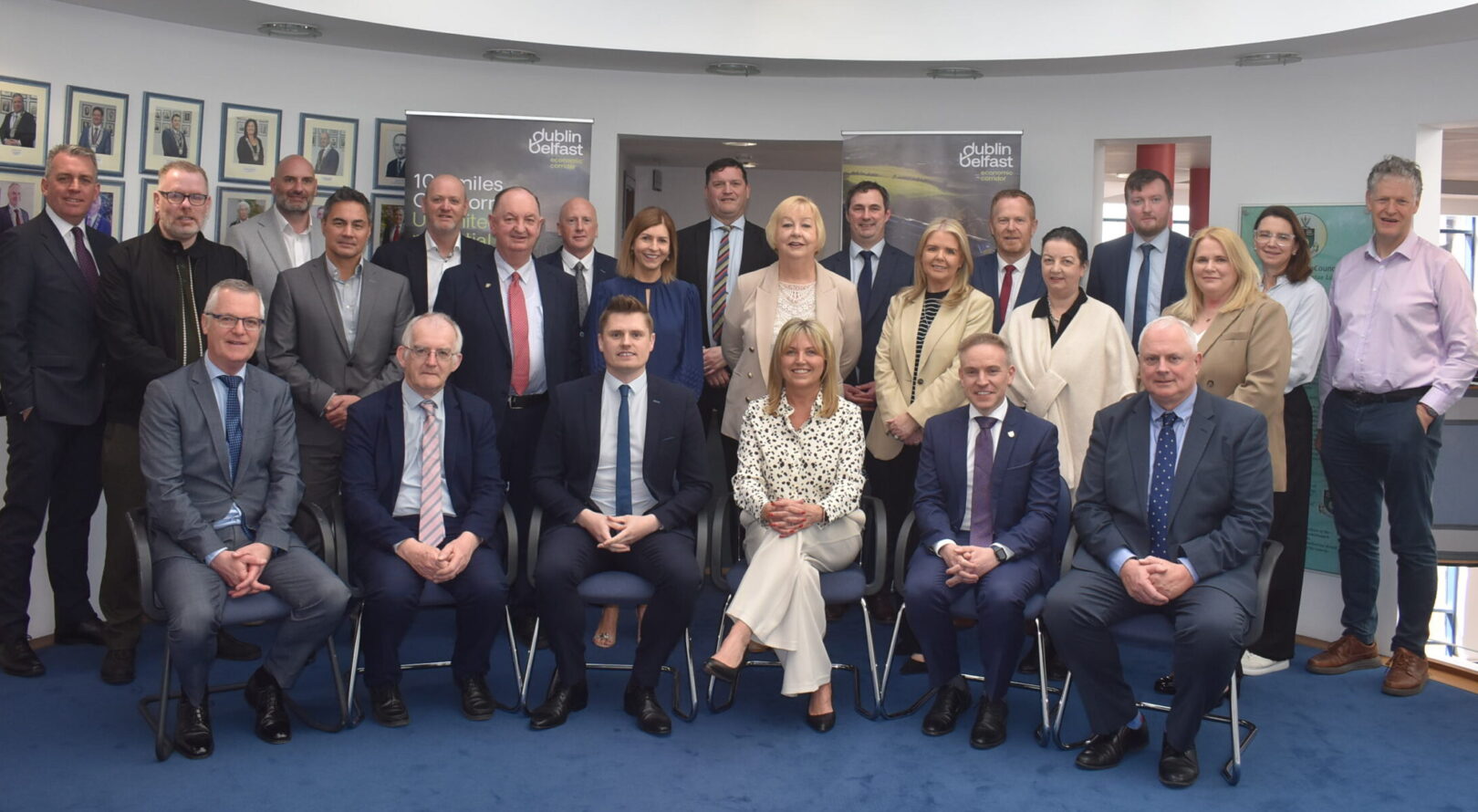
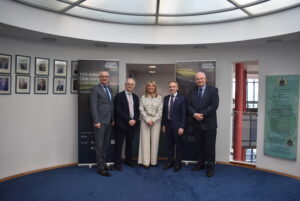
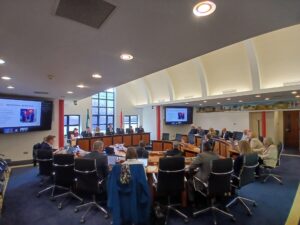
Louth County Council hosted the first quarterly meeting of the Dublin Belfast Economic Corridor (DBEC) Political Advisory Group for 2026 on 23 April, bringing together elected members, Chief Executives, senior local authority officials and key university partners from across the region.
Opening the meeting, Co-Chair of the DBEC Political Advisory Group and Councillor with Meath County Council, Cllr Sharon Tolan, set out the purpose of the group and the role it plays in driving delivery across the Corridor:
“This group meets every quarter to oversee and provide guidance and support to the Dublin Belfast Economic Corridor partnership, ensuring that it delivers for the people, businesses and communities along it.
Our focus is on driving joined-up decision-making across councils, pushing for the infrastructure and skills investment the Corridor needs, and ensuring we are speaking with one clear, consistent voice at the national level.
If we are serious about balanced regional growth and better connectivity between Dublin and Belfast, then this work has to be backed — and that’s exactly what this group is here to do.”
The meeting reflects the continued focus on aligning political leadership across the Corridor around shared priorities, including infrastructure delivery, skills development, economic growth and strengthened cross-border collaboration.
Chief Executive of Louth County Council, David Conway, welcomed members to the county and highlighted Louth’s central role within the Corridor:
“Louth sits at the centre of the Dublin Belfast Economic Corridor, and that position brings real opportunity.
We see the benefits of that every day, but we also understand what is required to fully realise it — sustained investment in infrastructure, stronger links between education and industry, and the ability to attract and retain talent.
Being part of the Corridor strengthens our ability to deliver on these priorities. It enhances Louths platform to compete, to collaborate at scale, and to continue attracting investment, supporting business growth and creating high-quality jobs.”
As part of the meeting, members engaged with Dr Ryan Feeney, Vice – President Governance and External Affairs and Registrar, from Queen’s University Belfast and, Dr Diarmuid O’Callaghan, President, Dundalk Institute of Technology, who provided an update on their strategic alliance and its implications for both institutions, particularly in relation to education, research and development provision, and the wider impact across the Corridor.
The partnership, which will see Dundalk Institute of Technology established as a University College of Queen’s University Belfast, represents a significant development for the region. It is expected to strengthen the talent pipeline, expand access to higher education, and support increased collaboration in research, innovation and industry engagement across the Corridor.
The meeting also focused on advancing key collaborative projects across the Corridor, with a strong emphasis on circular economy initiatives and skills development aligned with real industry demand. Strengthening links with industry — particularly through the recently established Industry Advisory Panel — was also a priority, ensuring that business needs are directly shaping the Corridor’s direction. Members also reinforced the importance of continuing to develop clear messaging and branding for the Corridor, in order to raise awareness of the Dublin Belfast Economic Corridor at local, national and international level, alongside the need for clear, coordinated leadership to help drive delivery and progress projects forward.
The Political Advisory Group plays a key role in maintaining momentum and ensuring alignment across local authorities, with a clear focus on progressing strategic, Corridor-wide priorities.
As the Corridor continues to develop, partners across the Dublin Belfast Economic Corridor remain committed to working collaboratively to drive investment, improve connectivity, and deliver tangible economic benefits for communities and businesses throughout the region.
Stay up to date with this story on our LinkedIn and X platforms.